

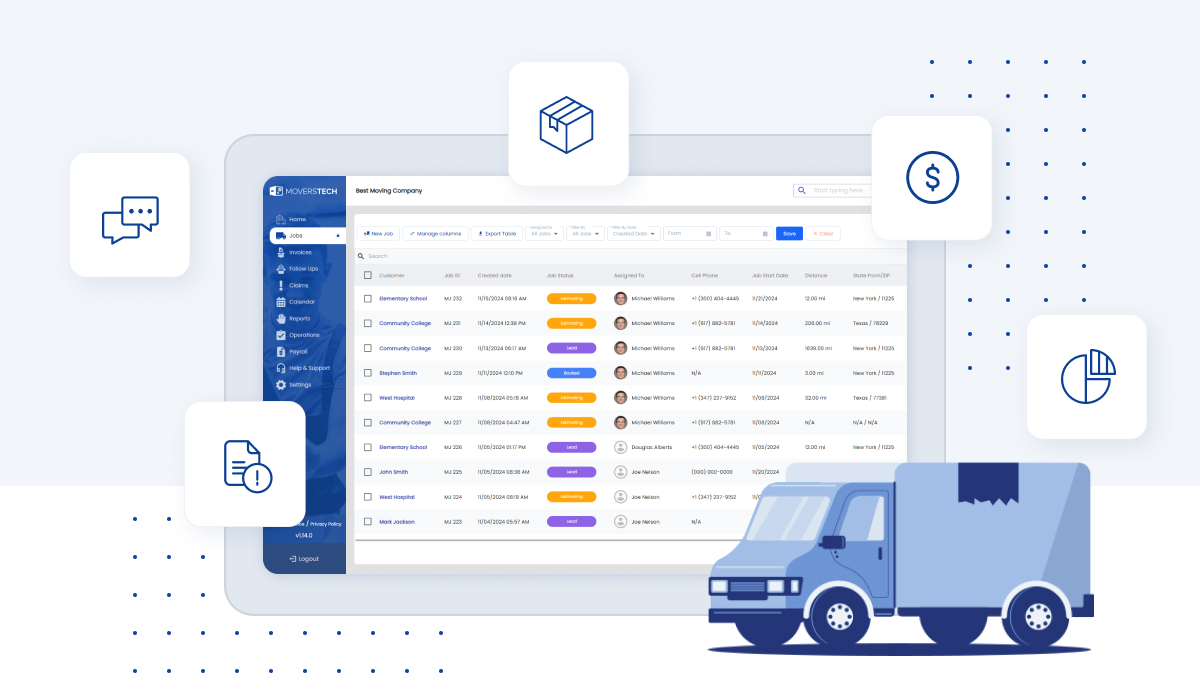
The CRM value chain is a step-by-step system that helps movers organize leads, understand customers, and manage every job from the first call to the final follow-up. When each stage is clear, your team works faster, books more moves, and delivers a smoother customer experience.
Running a moving company means handling many details at once. You manage leads, send estimates, plan routes, schedule crews, and keep customers updated. A moving company CRM helps organize these steps, but it only works well when you follow a clear strategy. This is where the CRM value chain is useful. It shows how to understand your customers, how to communicate with them, and how to guide them from the first quote request to the final follow-up.
What is the CRM value chain?
The CRM value chain explains how to build a long-term CRM strategy for your business. It breaks the process into clear steps that help you understand your customers and serve them in a more organized way. In the moving industry, the CRM value chain shows how you guide a lead from the first contact to a booked job and then to repeat work. Each link in the chain supports a different part of that relationship. When you follow the CRM value chain, your customer care software for movers becomes easier to use, more accurate, and more useful during sales and daily operations.
The five links of the CRM value chain
The CRM value chain is basically a roadmap that helps movers understand their customers, stay organized, and give people a better experience from the first call to the final follow-up. Each step plays a role in how you book more jobs and keep customers happy.
Customer portfolio analysis
Figure out who your customers are, where your best jobs come from, and which leads are most profitable.
Customer intimacy
Get to know your customers’ needs so you can give them a smoother, more personalized moving experience.
Network development
Build strong relationships with partners like vendors, agents, and team members who help you deliver great service.
Value proposition development
Make sure what you offer stands out, whether it’s better pricing, faster service, reliable crews, or clear communication.
Customer lifecycle management
Stay connected with customers from the first inquiry to the post-move follow-up so they return and refer you.
Customer portfolio analysis
The first link in the CRM value chain is customer portfolio analysis. This step helps you understand who your best customers are and which leads do not fit your services. In the moving industry, this means looking at the types of jobs you handle, how often they book, and which channels bring the strongest leads. When you outline a target demographic, you can focus your efforts on customers who match your services and budget.
For movers, this includes checking the volume of local jobs, long-distance requests, commercial moves, and referrals. Your moving company CRM should track lead source, job size, move date, and expected revenue. When these details are clear, the CRM value chain becomes easier to apply, because you know exactly which customers deserve more attention and which leads are less likely to convert.
Customer intimacy
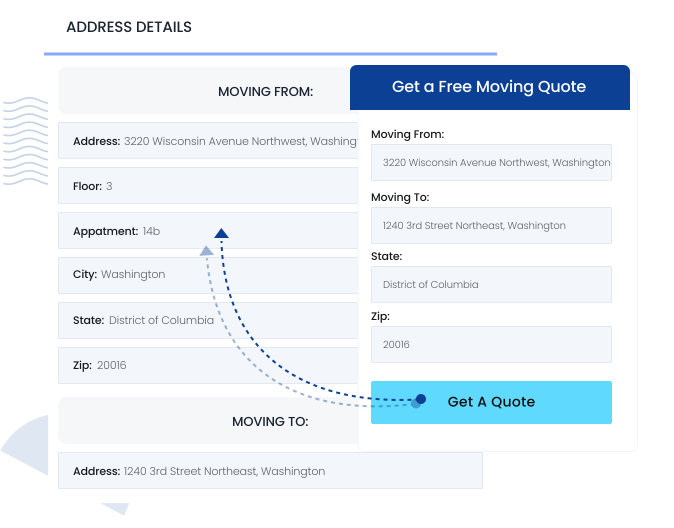
The second link in the CRM value chain is customer intimacy. This step focuses on learning who your customers are and what they need. For moving companies, this goes beyond basic contact information. Your CRM should capture details such as home size, inventory notes, special items, packing needs, storage needs, and the customer’s preferred move date.
When your intake process helps you capture moving leads with accurate details, your estimates become more precise, and your follow-up more effective. The CRM value chain also encourages you to study past interactions. Look at previous quotes, completed jobs, and feedback. When you understand each customer’s requirements and expectations, you can communicate more clearly and offer services that fit their situation. This level of detail helps your team stay organized and improves the customer experience from the first call to the final follow-up.
Network development
The third link in the CRM value chain is network development. In the moving industry, strong relationships support steady growth. You are not only working with customers. You also work with real estate agents, property managers, storage facilities, and moving brokers. Each connection can send new jobs your way. Your moving CRM software should help you track these partners, record referral sources, and follow up with them on time.
The CRM value chain also helps you understand how past customers shape your network. Reviews, referrals, and repeat moves all come from positive experiences. When your CRM stores clear notes on each job and customer, it becomes easier to stay in touch and offer help when they plan their next move. Over time, this network becomes one of your strongest assets for building trust and winning consistent business.
Value proposition development
The fourth link in the CRM value chain is value proposition development. This step focuses on offering the right service at the right moment. For moving companies, this means matching your offer to each customer’s situation. A family planning a long-distance move may need full packing and storage. A student moving locally may want a simple, budget-friendly option. Office managers may need after-hours scheduling to reduce downtime.
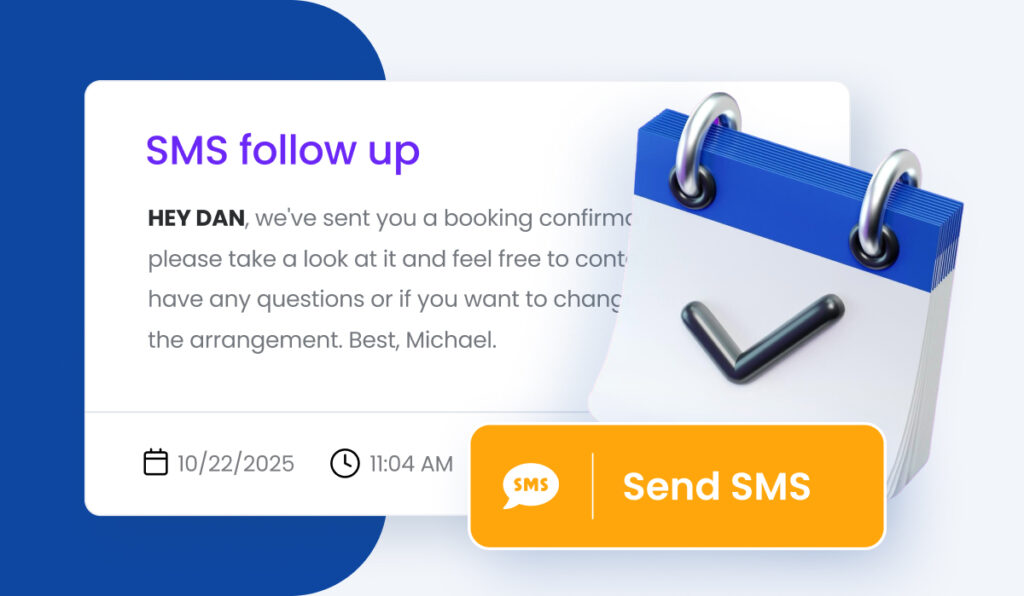
When your CRM organizes these details, you can send quotes and follow-ups that fit the customer’s needs. You can also highlight services they already showed interest in, such as packing, furniture protection, or storage. The CRM value chain helps you send a well-timed proposition that feels useful rather than generic. This approach increases booking rates and keeps your communication clear and helpful.
Customer lifecycle management
The fifth link in the CRM value chain is customer lifecycle management. This step covers every part of the customer’s experience with your moving company. In most cases, the lifecycle begins when someone requests a quote. It continues through the estimate, booking, the move itself, and the final follow-up. A moving company sales pipeline inside your CRM should reflect each of these stages so your team knows exactly where every lead stands.
The CRM value chain helps you track progress and spot problems early. For example, if many leads receive estimates but do not book, you can review pricing or follow-up timing. Different move types also follow different lifecycles. Office moves often require more planning, while local moves may close faster. When you map these steps clearly in your CRM, you improve organization and deliver a smoother experience to every customer.
How the CRM value chain applies to moving companies
The CRM value chain becomes more practical when you connect each link to real tasks inside your moving company. These steps guide how you manage leads, customers, partners, and booked jobs.
- Customer portfolio analysis – Helps you sort local, long-distance, and commercial leads so you can focus on the jobs that match your schedule, crew size, and budget.
- Customer intimacy – Allows you to collect accurate move details during intake. This includes inventory notes, packing needs, special items, and storage requests.
- Network development – Covers your relationships with real estate agents, storage facilities, and moving brokers. Tracking these partners in your moving CRM software shows where strong referrals come from.
- Value proposition development – Helps you decide when to present packing, protection, discounts, or storage so the offer feels clear and timely for each customer.
- Customer lifecycle management – Keeps your moving company sales pipeline organized by showing every stage from quote request to repeat move.
When the CRM value chain is set up inside a dispatch CRM for movers, both sales and operations stay aligned, which reduces missed steps and speeds up response time.
Setting up your CRM value chain in a moving company
A well-organized CRM value chain makes your moving CRM more effective from day one. It guides how you collect lead details, send estimates, and follow up at the right time. When your system reflects each stage of the CRM value chain, your team can manage leads more accurately and close jobs faster. This is why a strong moving company leads management should always be part of your setup.

Reflect, adjust, and improve your moving CRM
The CRM value chain also helps you review your results and make quick improvements. Your moving CRM should show clear numbers such as quote to booking rate, average revenue per job, repeat customer activity, and response time. These metrics make it easier to see which parts of your process are working and which need attention.
Some moving companies believe a CRM will fix problems on its own without clear stages, accurate data, or consistent follow-up. This is one of the common myths about moving company CRMs, and it often leads to missed steps and confusion. If one stage of the CRM value chain slows down, you can adjust your process right away. This keeps your sales pipeline healthy and your customer experience consistent.
Put the CRM value chain to work for your moving company
The CRM value chain gives your moving company a simple way to organize leads, customers, partners, and booked jobs. When each step is clear in your CRM, your team works faster and communicates better. It becomes easier to manage estimates, follow-ups, dispatch tasks, and repeat moves. Review your current setup and check whether each link in the CRM value chain is visible in your sales pipeline. Small improvements can create a smoother workflow and help you turn more leads into scheduled jobs. If you want tools built for movers, explore how MoversTech CRM can support your growth.
